SEQUENTIAL CONSTRUCTION
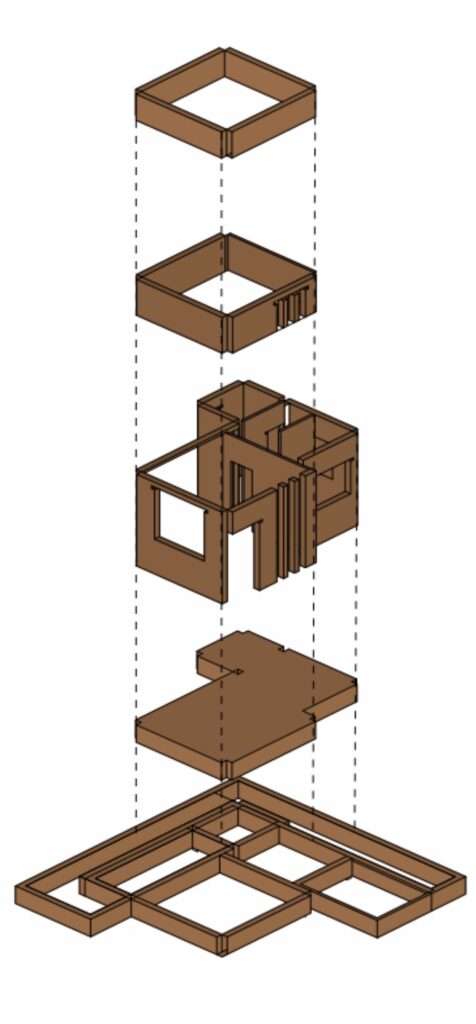
The exploded diagram illustrates the layered construction of the unit through a load-bearing brick masonry system, progressing from foundation to roof. Brick walls define the structural envelope, integrating openings, partitions, and climatic buffers within a cohesive framework.
The assembly highlights material continuity, thermal mass, and construction simplicity, establishing an efficient, durable, and context-responsive building system.
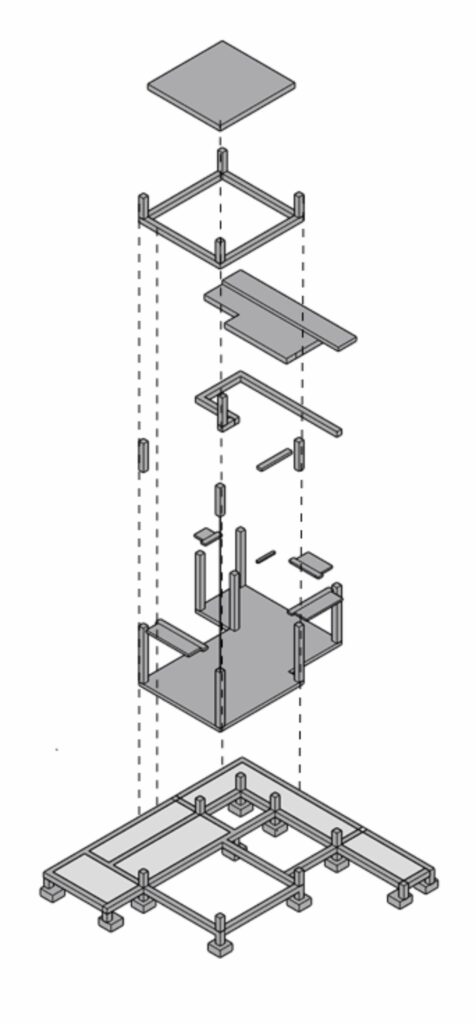
The exploded diagram illustrates the assembly of the unit through a reinforced cement concrete (RCC) frame structure, progressing from foundation footings to slab and roof. Vertical columns and horizontal beams establish the primary structural grid, supporting slabs and defining spatial volumes. The system allows flexibility in partitioning while ensuring structural stability and load distribution. The layered construction highlights precision, modularity, and durability, resulting in a robust and adaptable built form.
Framing experience through form
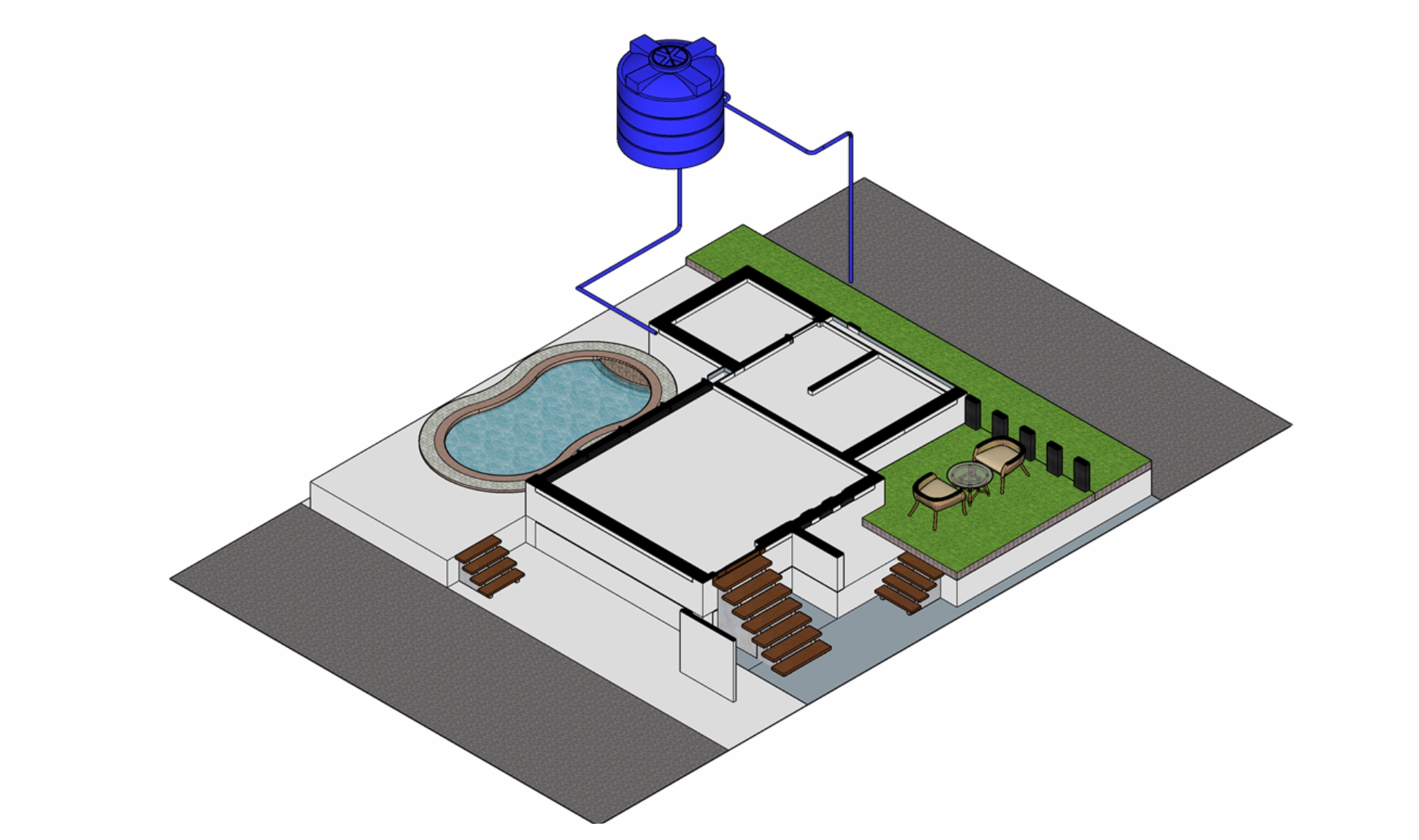
A 3D visualization illustrating the water storage tanks and the integrated pipeline network, effectively depicting the distribution of water throughout the house. The system is articulated as a seamless infrastructural layer, revealing the flow from storage to usage points with clarity and precision. It highlights the efficiency of resource management, ensuring optimal distribution while minimizing wastage.
The visualization also emphasizes the integration of services within the architectural framework, transforming a technical system into a legible and essential component of the living environment.
Spatial Configuration
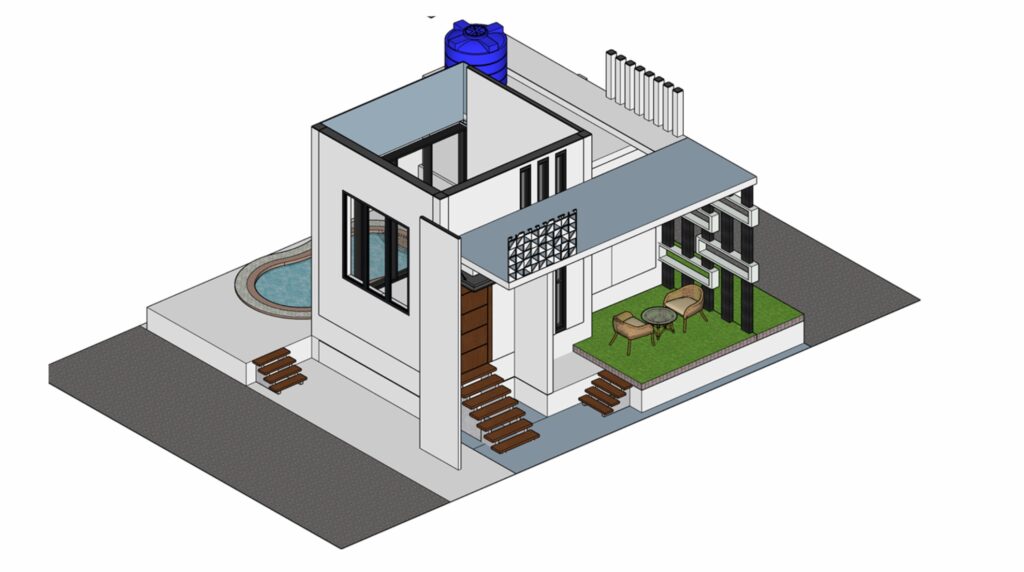
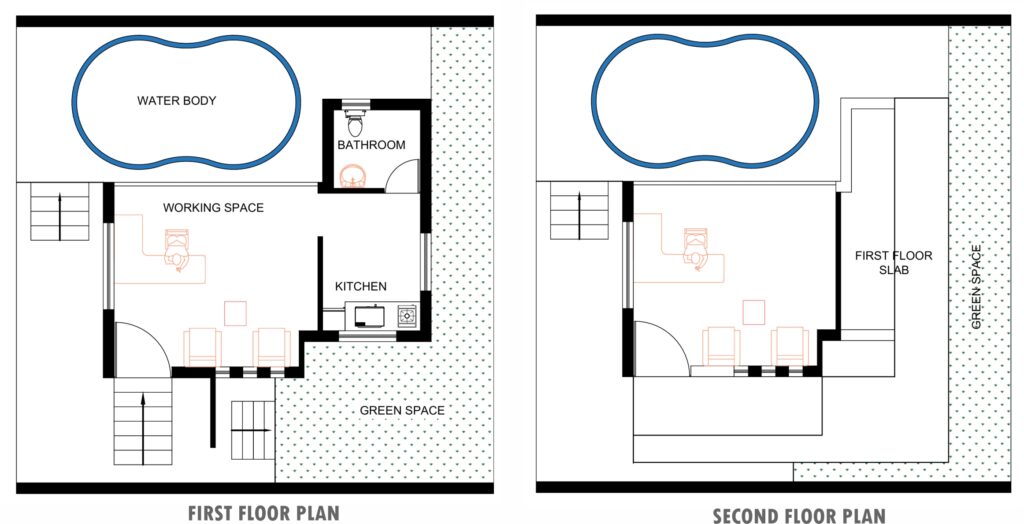
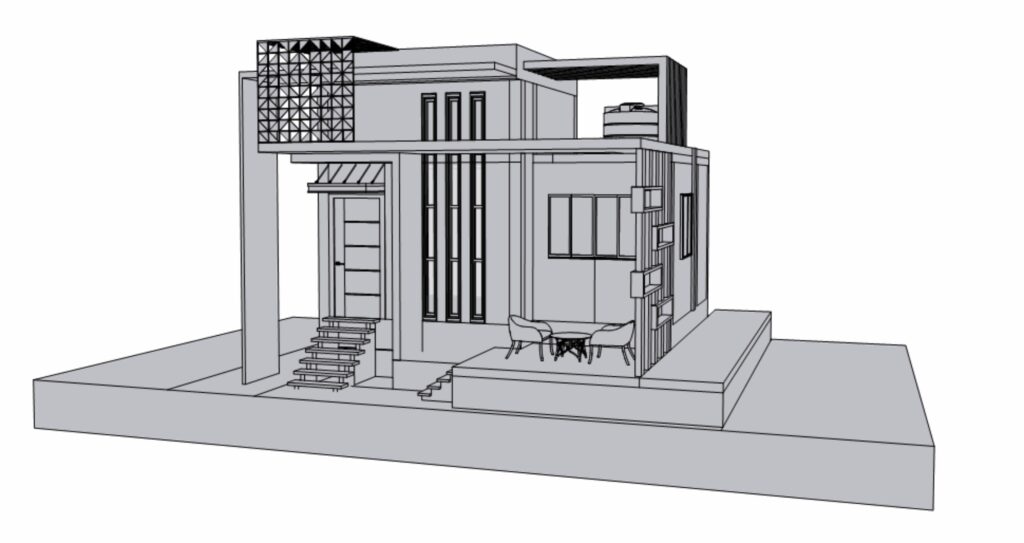
Neev proposes a context-responsive housing model for the Kharva community in Mandvi, Kutch, integrating living and livelihood within a cluster-based framework. Private dwellings are interwoven with semi-open workspaces and creative co-working zones, enabling individuals to work from home while fostering collaboration and flexibility. The planning emphasizes climate responsiveness and community living, while maintaining a conscious balance of built and open spaces—limiting construction to 40% and preserving 60% of the site for landscape, ventilation, and shared outdoor activities—creating a sustainable and socially rooted habitat.
Construction Phasing & Integrated Service Strategy
Construction Phasing
The construction process is articulated as a sequential progression from foundation to structural framework, systematically integrating built form with service infrastructure. Each stage ensures precision, efficiency, and alignment with the overall architectural intent.
Integrated Service Framework
The construction stages map the coordinated development of structure and services, embedding the water supply network within the building system to achieve a cohesive, efficient, and well-synchronized architectural outcome.
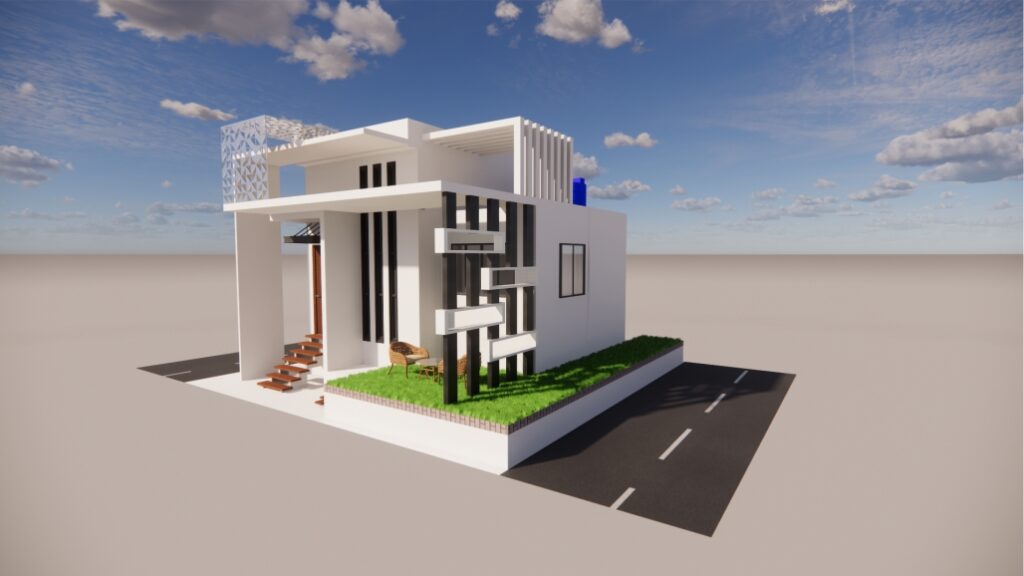
Visual Narratives of Spatial Emergence
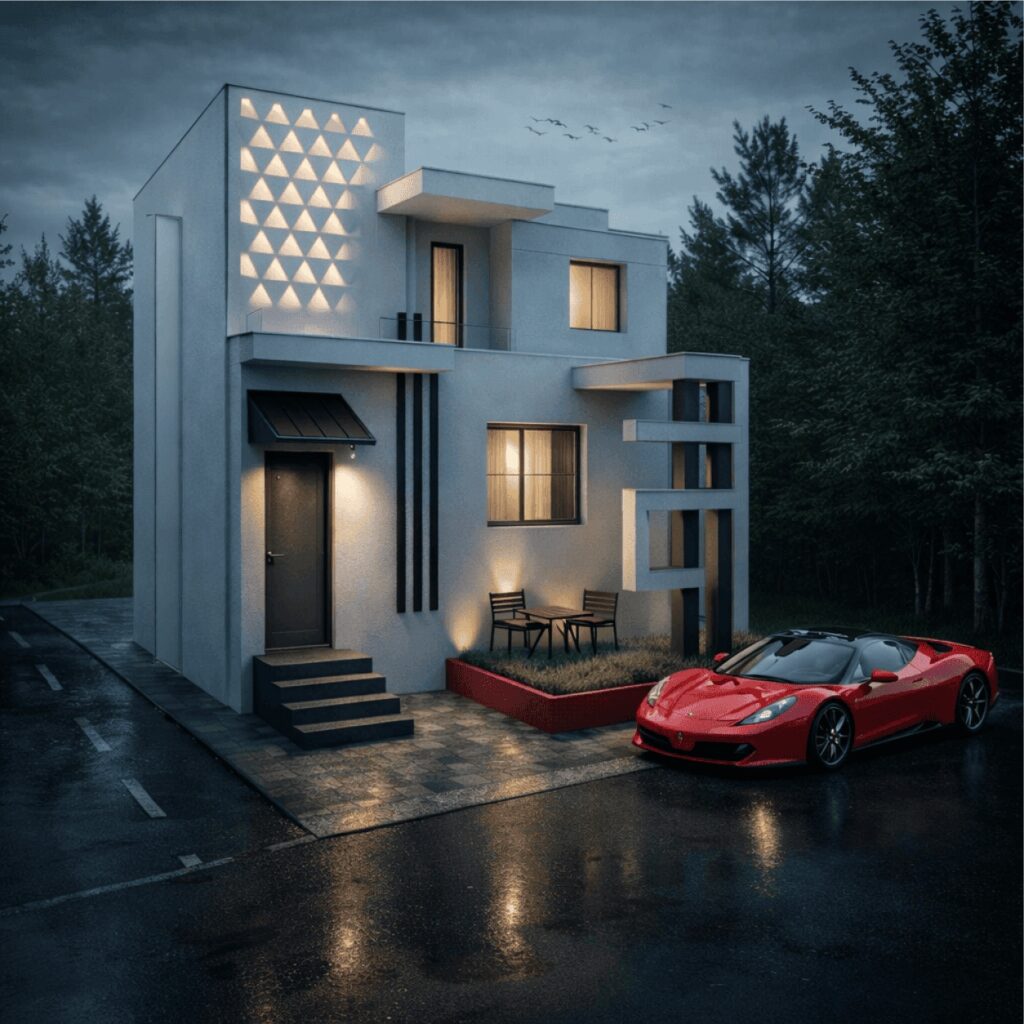
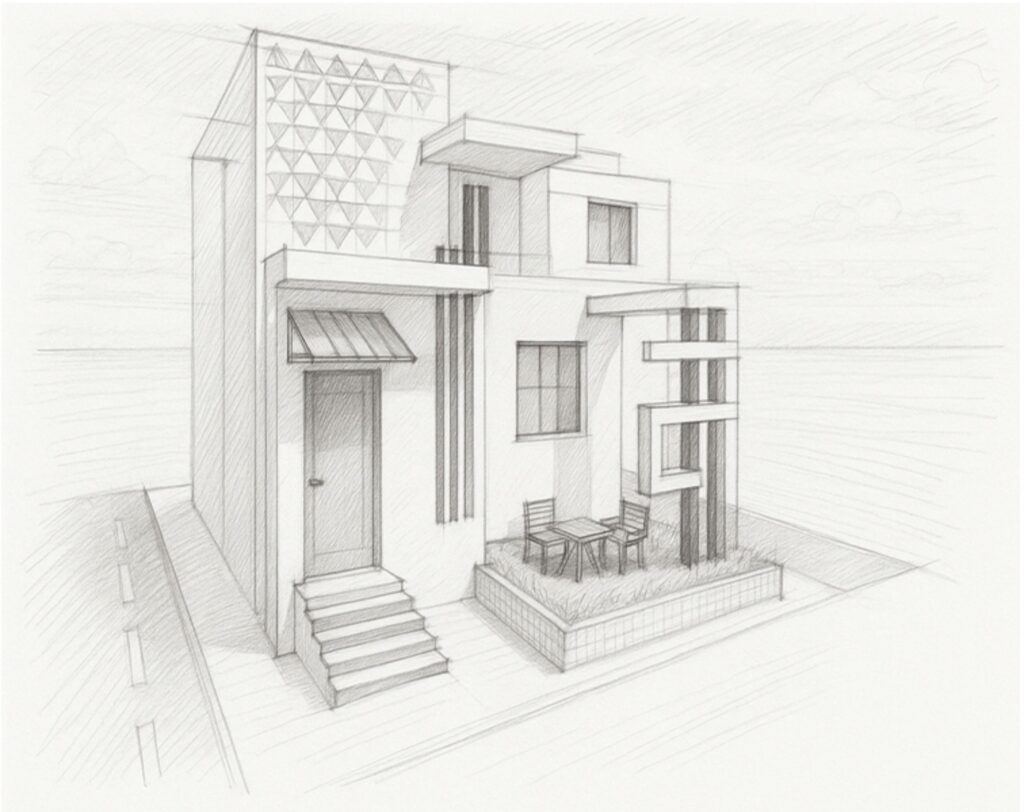
Where space becomes experience