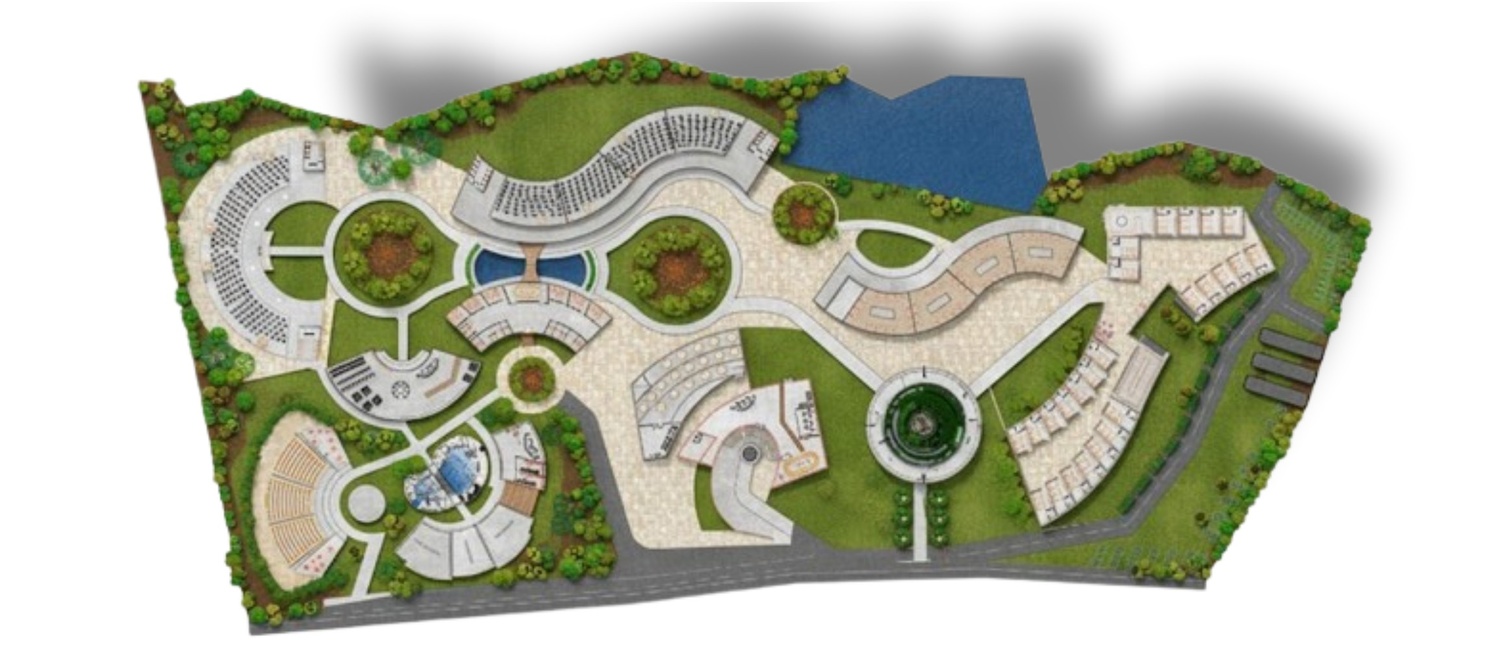
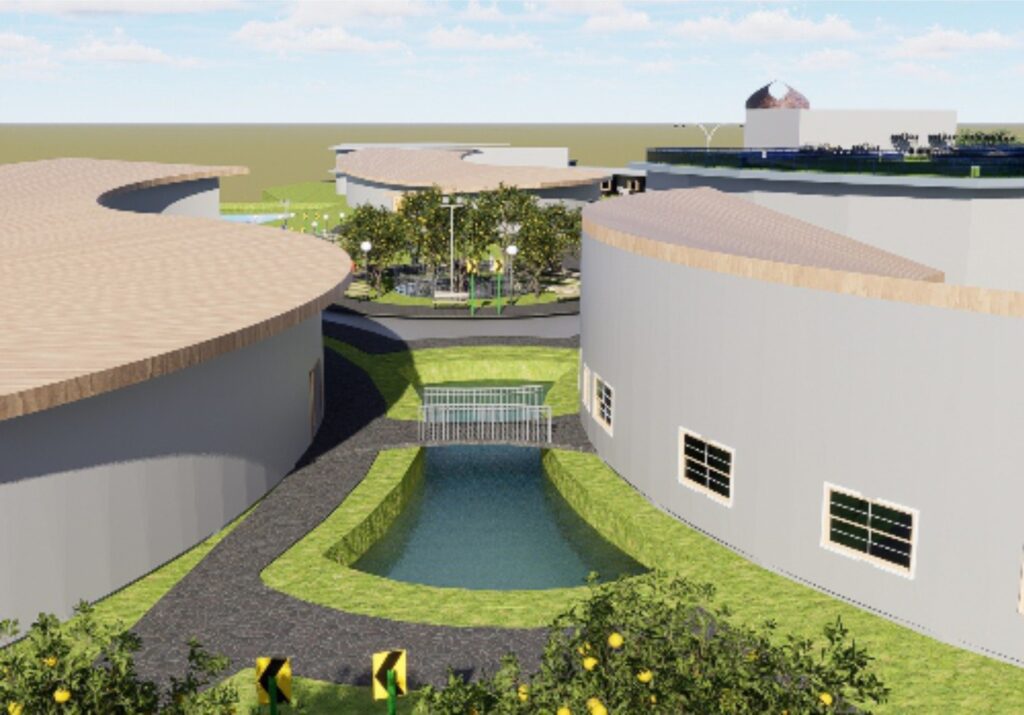
The Mountain School for Ecology and Leadership is conceived as a human-centric campus that harmonizes with the site’s contours, trees, and water bodies, fostering comfort and a deep connection to nature.
A thoughtful spatial sequence—from the open rooftop cafeteria to the introspective yoga room—creates a gradient of interaction, reflection, and well-being.
Circulation becomes an experiential journey, integrating passive display zones along pathways to enhance engagement while minimizing cognitive and physical fatigue.
DESIGN DEVELOPMENT

A cluster conceived through the logic of the snail, its spiral geometry responding to the undulating terrain of Saputara—articulating a fluid spatial progression across a 25,000 sq. m. site, harmonizing with the region’s contours, climate, and organic growth patterns to establish a contextually rooted architectural narrative.
Spatial Articulation
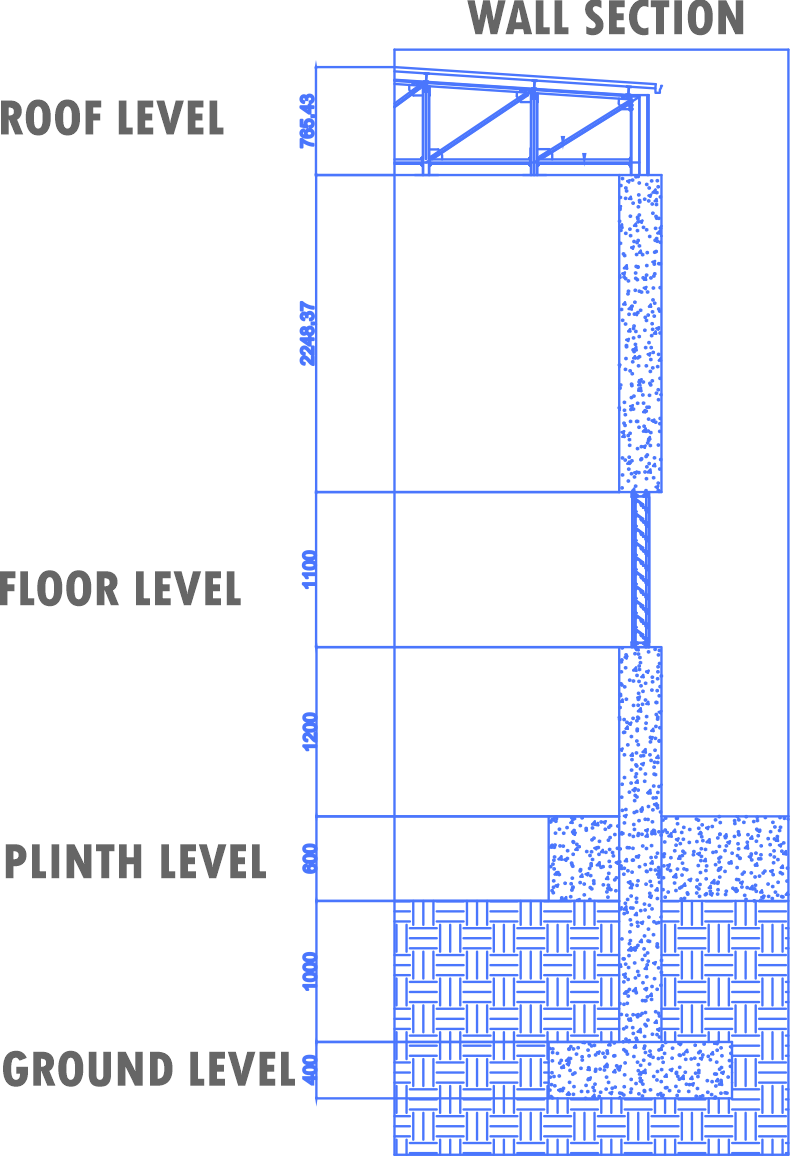
The technical drawings articulate the structural system, material connections, and level hierarchy, clearly defining the relationship between foundation, floor, and roof.
They establish the construction logic through precise detailing, ensuring clarity in load transfer, joinery, and overall spatial organization.
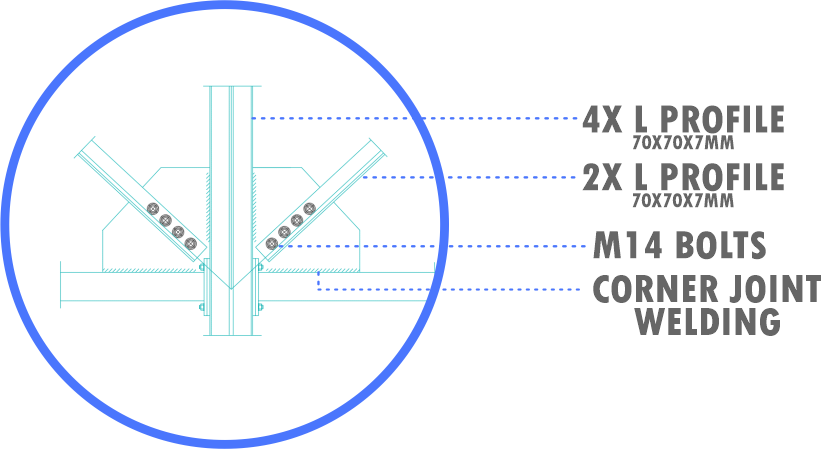
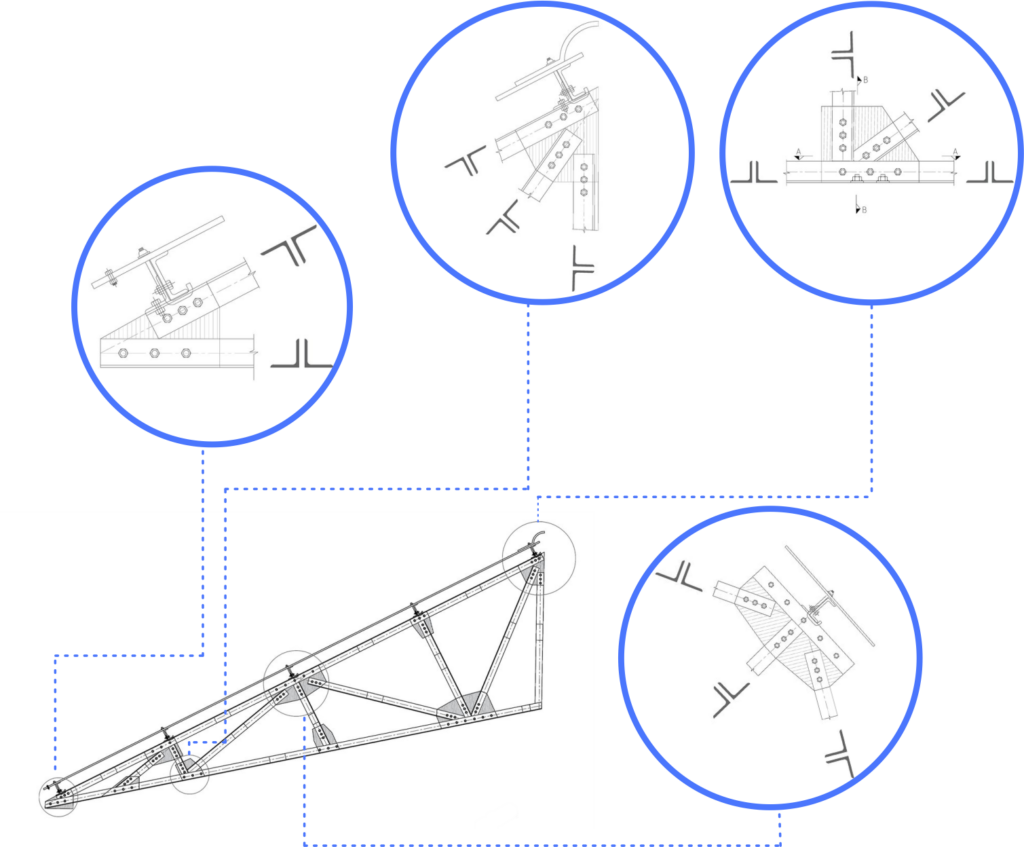
Curvilinear Roof Support Truss System
An inclined steel truss system supports the curvilinear roof, combining structural efficiency with architectural clarity. The tapered chord members and triangulated web configuration ensure effective load distribution, while gusset plate bolted connections resolve angular joints. Loads are transferred through the truss to base plate supports, providing stability against dead, live, and lateral forces.
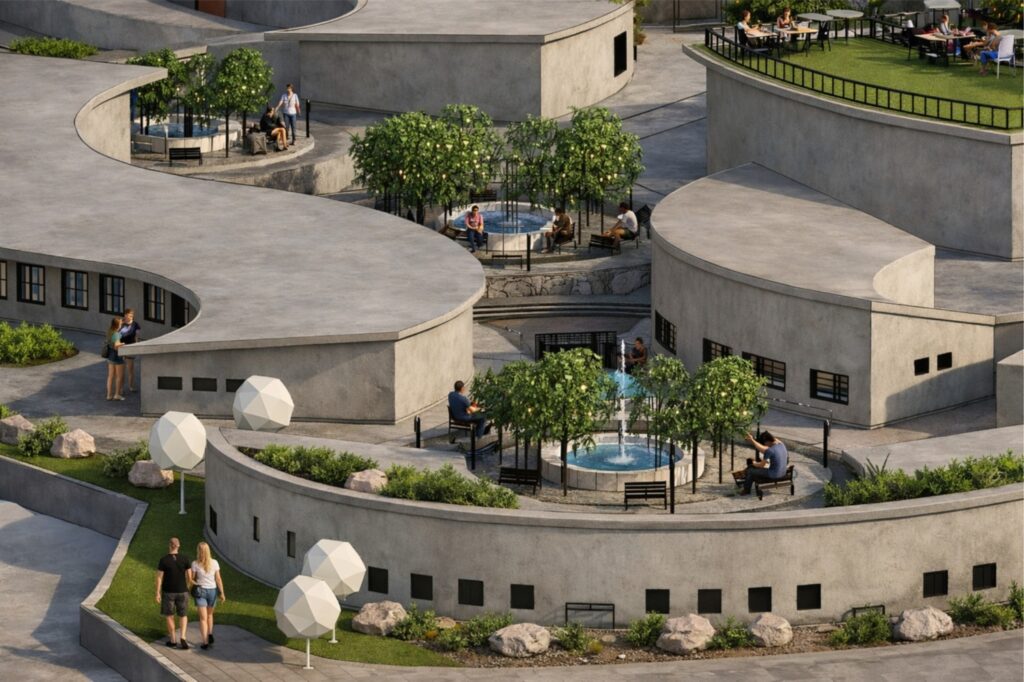
Architectural Genesis
Rooted in the biomimetic logic of the snail, the design emerges as a spiral-driven cluster across a 25,000 sq. m. site in Saputara. The genesis lies in translating the organism’s adaptive growth into an architectural system—where expansion is incremental, responsive, and inherently contextual. The spiral becomes both generator and organizer, structuring movement, program, and spatial hierarchy.
Photorealistic Spatial Representation
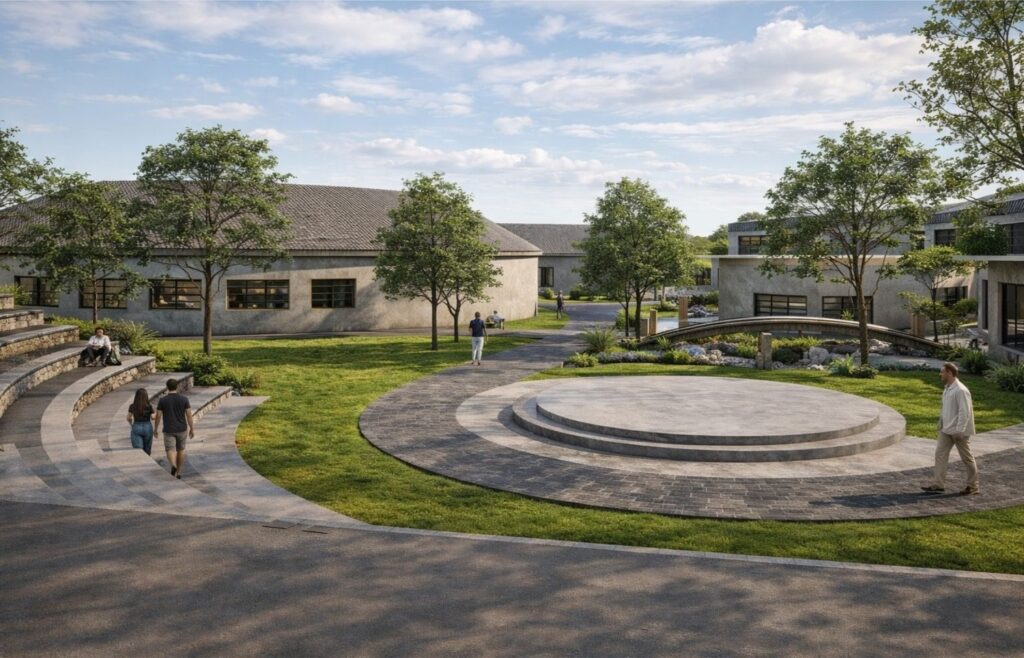
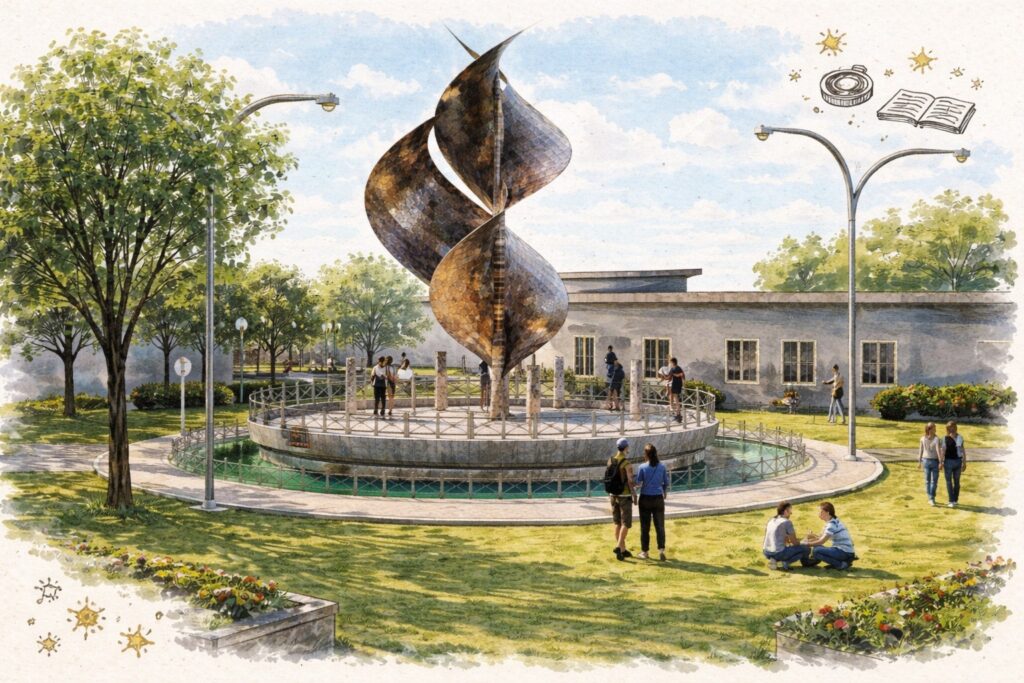
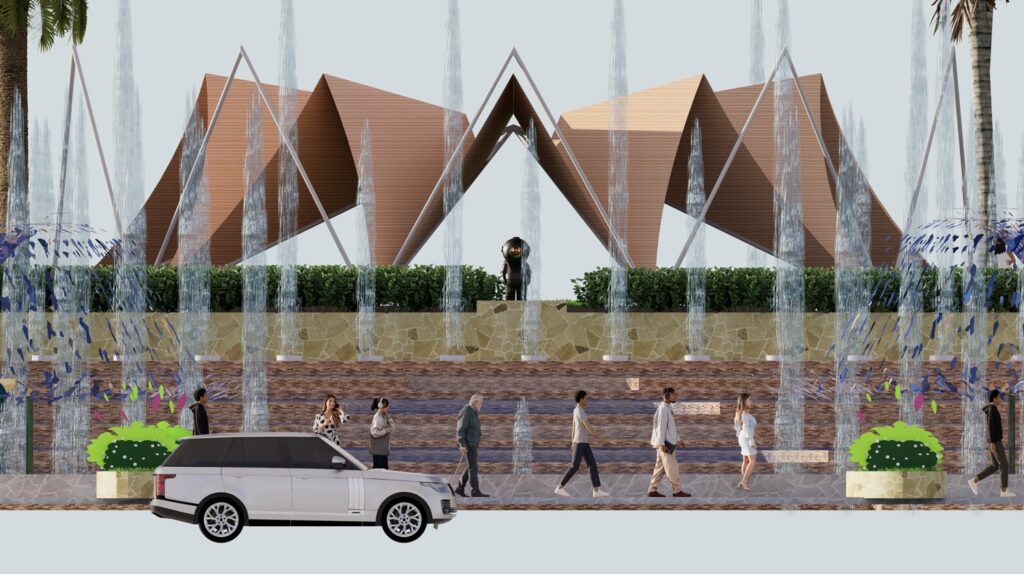
The entrance roundabout serves as a guiding anchor, organizing circulation, enhancing wayfinding, calming traffic, and marking a symbolic transition i to the insstitutional campus.
Sectional Expression of Contextual Integration
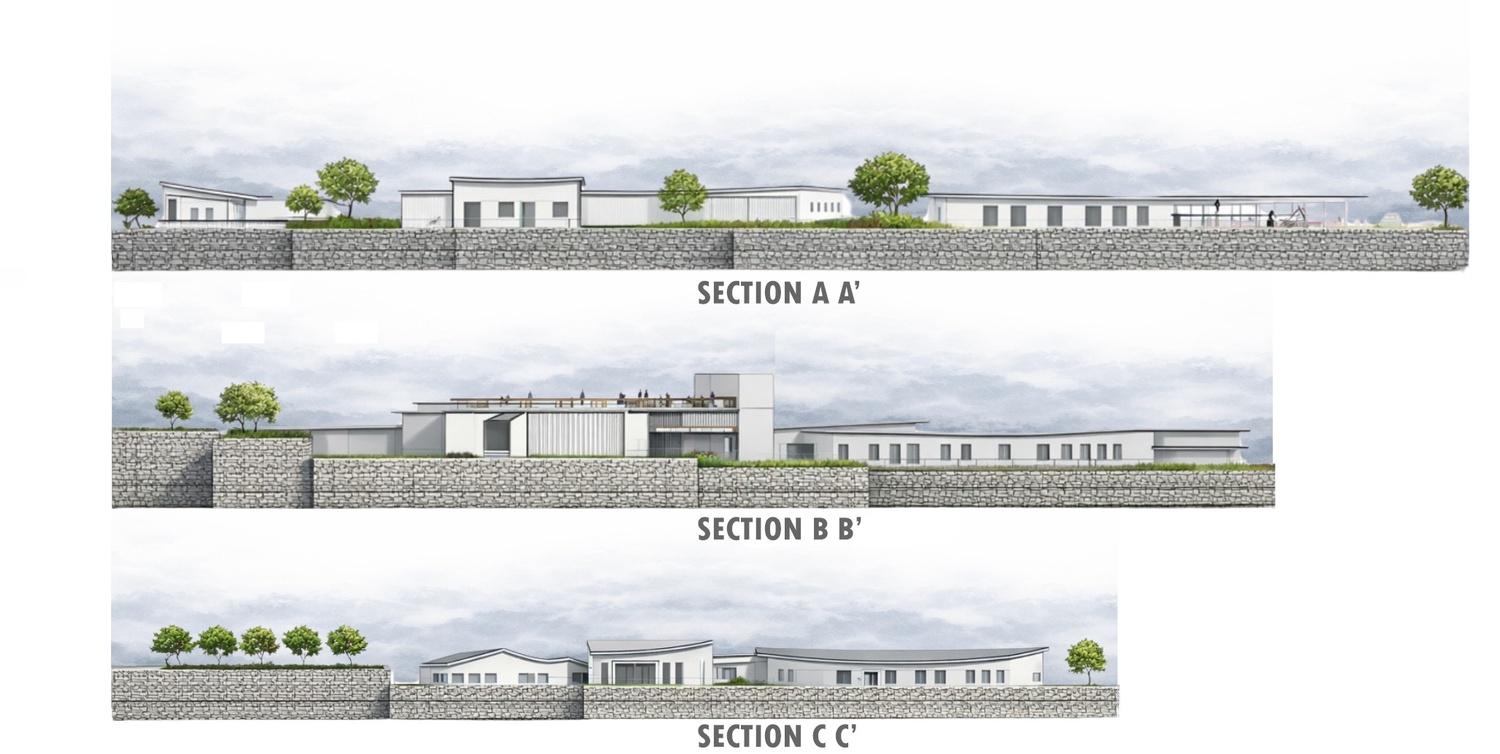
The section illustrates a terrain-responsive built form, seamlessly embedded within the landscape, where layered spatial transitions and integrated circulation create a cohesive and experiential architectural flow.
The interplay of built and open spaces reinforces environmental continuity while enhancing spatial clarity and user comfort.