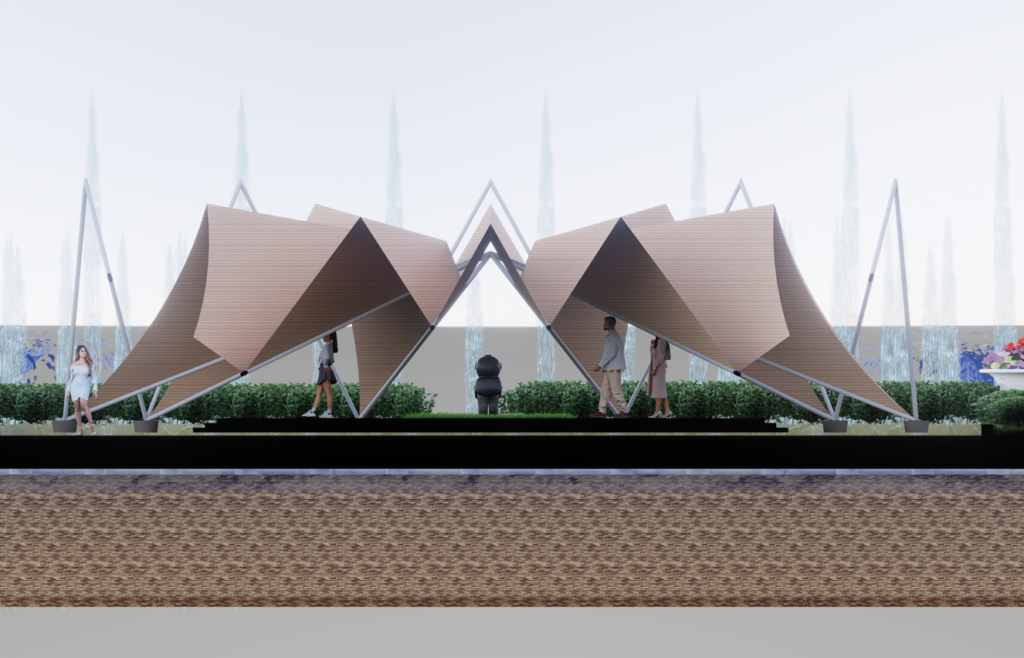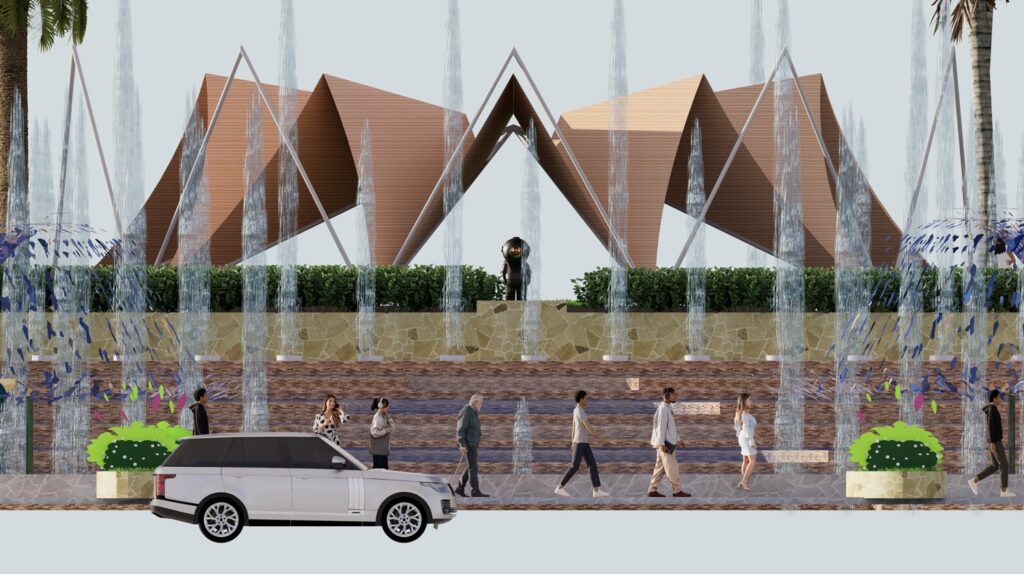
Aqualume is a lightweight tensile pavilion featuring a fluid, petal-like canopy that harmonizes structural efficiency with immersive environmental performance.
By blending light, water, and breathable membranes, the space creates a responsive microclimate where geometry and sensory experience converge.
Framing experience through form
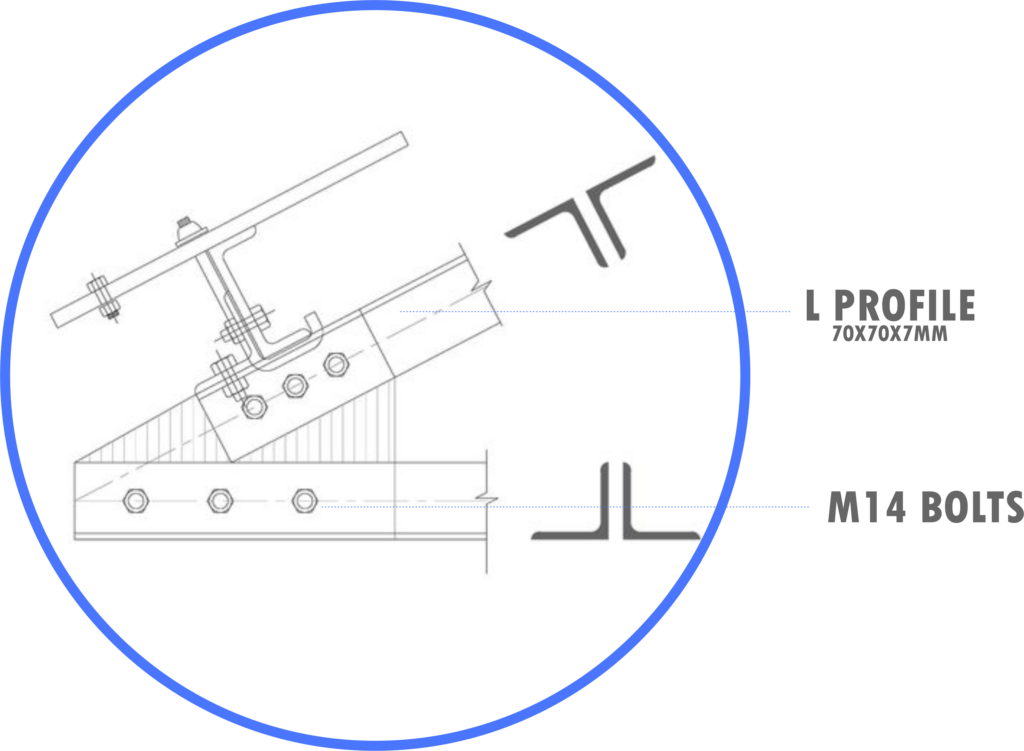
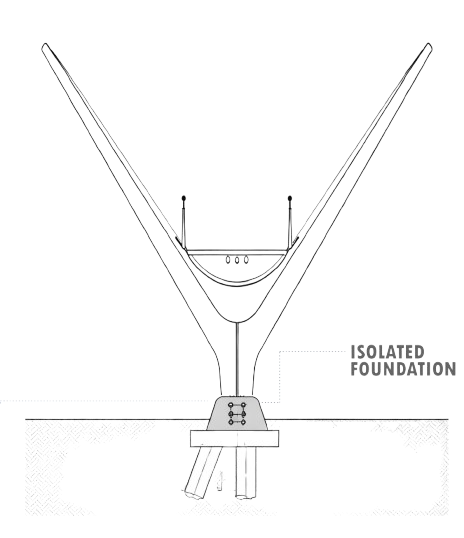
The tensile structure is anchored to the concrete
foundation through a precisely detailed base
connection, ensuring efficient load transfer and
structural stability.
This junction maintains the alignment and
integrity of the system while expressing a
refined balance between tension and
architectural lightness.
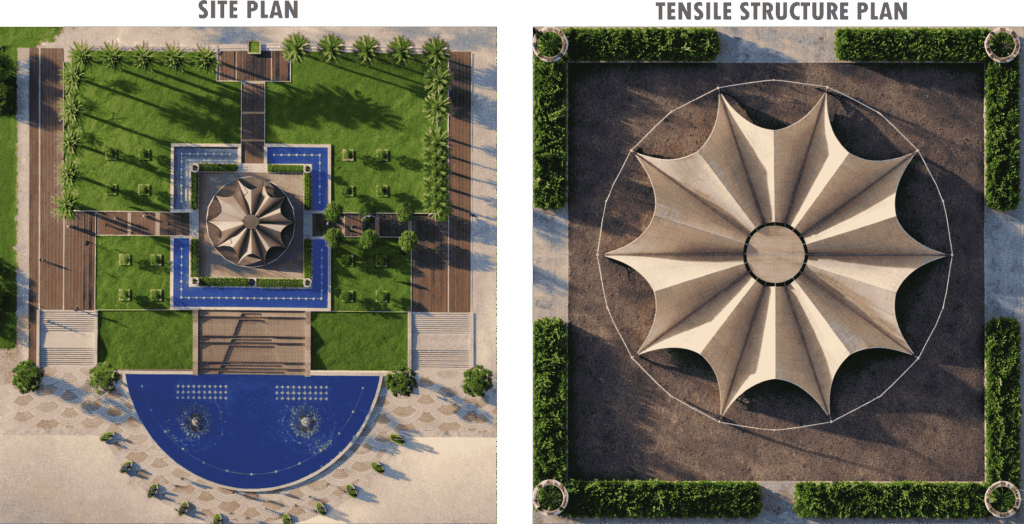
Spatial Configuration
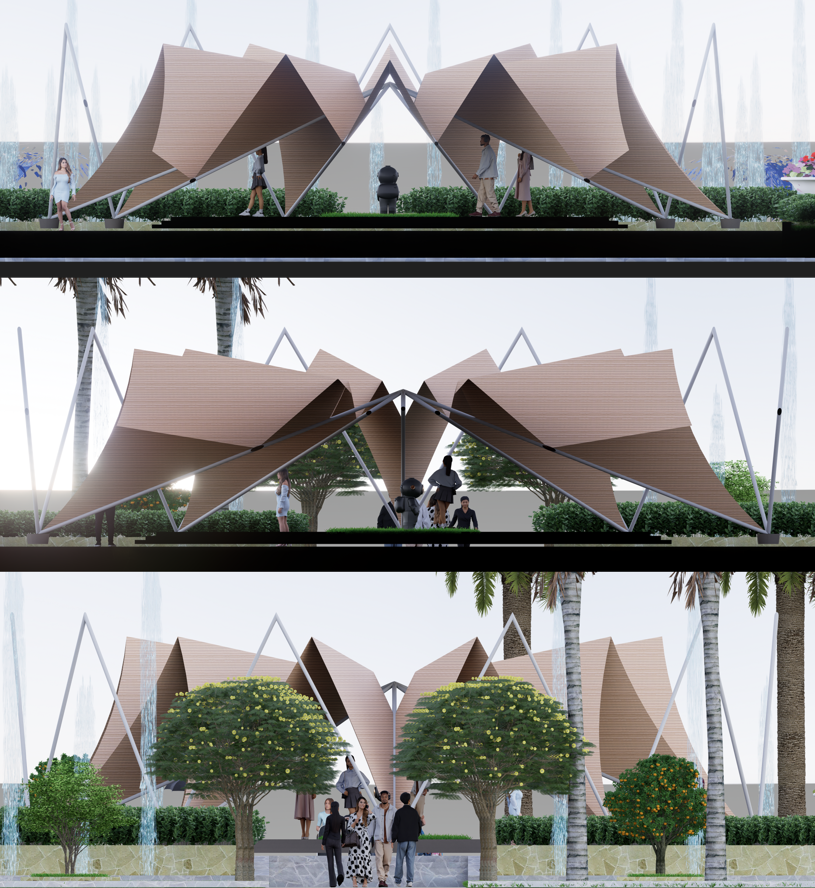
The pavilion emerges through a rigorous cut-and-fold tectonic, where a planar geometry is articulated into a high-performance tensile shell. Its undulating silhouette functions as a performative skin, modulating microclimatic conditions while defining a clear, centralized spatial hierarchy within the site’s formal grid.
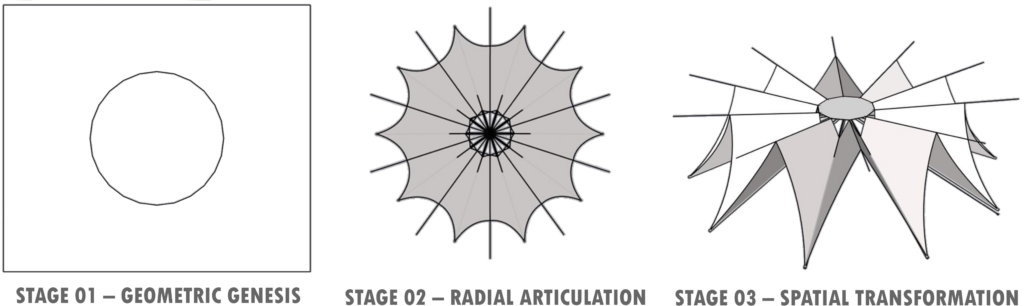
Architectural Genesis
The design emerges from a process of radial abstraction and geometric transformation, where an initial circular module is deconstructed into a dynamic, folded structural language. The interplay of tensile geometry and angular framing generates a porous threshold, seamlessly integrating water elements as kinetic layers within the built form.
Visual Narratives of Spatial Emergence
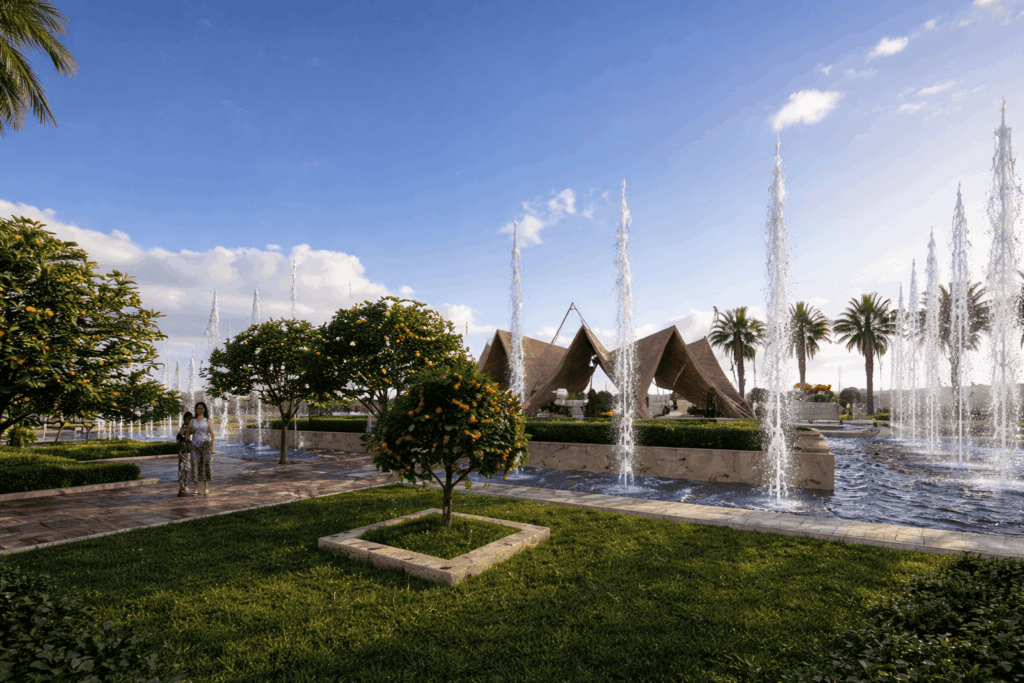
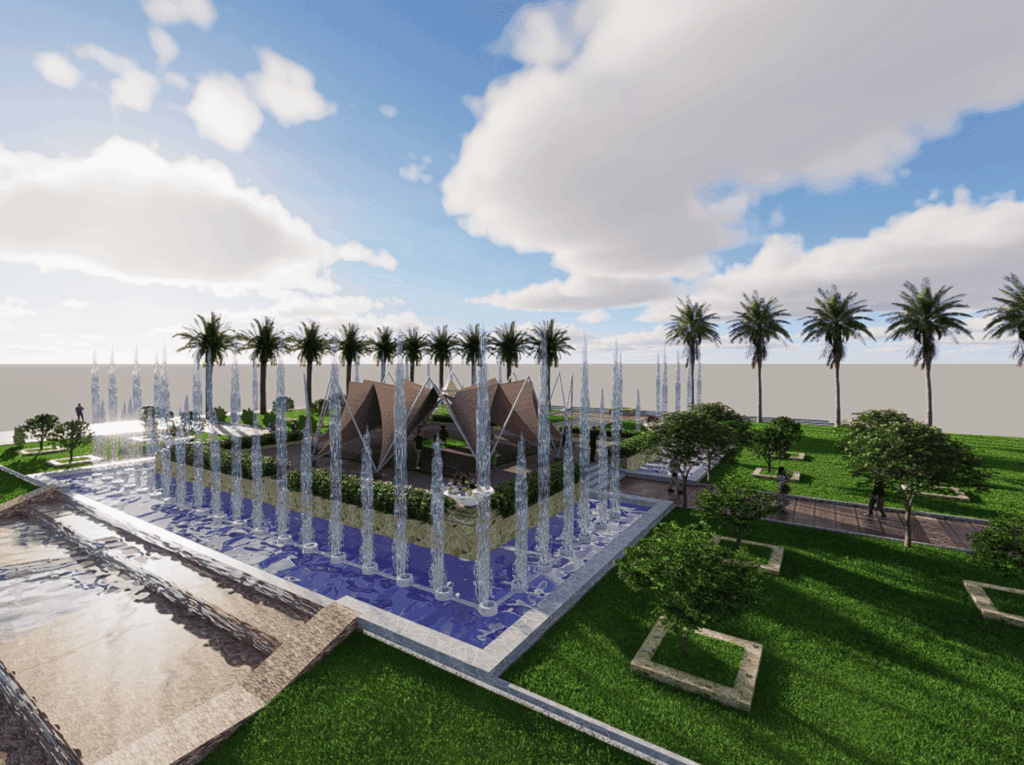
Where space becomes experience